
Colorism

Colorism.jpg

The below excerpt is my first attempt at writing about the issue of Colorism, during my sophomore year in college. I’ll share with you the first three pages of this 20-page research paper. This essay along with a few others eventually helped me win the Excellence in Communication Award at Penn State. If you decide you would like to read more about Colorism, please read the book The Color Complex, it’s one of the most thought-provoking books I’ve ever read regarding this issue:

Colorism

April 2008

If you’re black get back/if you’re brown stick around/ if your light you’re all right.

Being Black or being White has historically separated people in America and around the world but what many people fail to realize or even acknowledge is a gap has been bridged within the black race as a result of the differentiation and discrimination based on skin tones. Colorism is the coined word to describe the dirty little secret that our community perpetuates through its idealizations of Eurocentric beauty standards and denouncement of Afrocentric standards of beauty. Skin complexion, hair type, and body image have always been conscious issues for African American’s but it is the root of self-loathing and low self-esteem as well. This form of intra-racism has proved to be psychologically detrimental to African Americans’ sense of self. Colorism is immoral, unethical, and undeniably one of the reasons why black people do not feel accepted within their own race. It promotes insecurity and inequality because people are no longer being judged by their intelligence or capabilities; they are being judged by the lightness or darkness of their skin. If we are going to successfully progress into a bright future we need to learn and understand our history. If more African Americans took the time to understand their troubled past they would understand that colorism is essentially a construct and does not dictate the type of person you are, nor does it dictate your self-worth. Understanding the dark history behind colorism is one of the first steps towards progress. The next step toward progress is acceptance. The internalized self-hate one feels towards oneself because other members in society deem them inferior is one of the reasons why we may never advance towards a society that does not judge people based on the color of their skin. Accepting that being black is not necessarily a dilemma but an armor you should wear with pride is foremost. Continue reading “Colorism”

By Ky Books: God Help The Child

IMG_3664The cover of God Help The Child by Toni Morrison is what drew me to this book. It’s one of the most beautiful and colorful covers I’ve ever seen (black with colorful and bold words). This is Toni Morrison’s first book set in present-day, although at some points in the novel, it still reads like the characters are back in time. I enjoyed this book because it explores the consequences of childhood trauma, ranging from the death of a loved one to an unaffectionate parent. I also love her prose regarding the relationship between the two main characters Bride and Booker. There’s a case that Morrison is trying to build throughout the book and I can’t tell if it’s doom or hope.

For an extra treat, I found a song by Billie Holiday called God Bless The Child, very similar to the title of Toni Morrison’s book. Enjoy!

Follow Lifestylebyky.com

Instagram @lifestylebyky

Twitter @bykyblogs

https://www.youtube.com/watch?v=Z_1LfT1MvzI


Movie Monday: What Happened, Miss Simone?

I enjoyed learning about the life and times of Nina Simone, one of the most influential singers…ever. At the height of Simone’s career, she began to take part in the civil rights movement, which some say jeopardized her because she became too radical.

What I loved about this documentary is that it humanizes Simone and shows her vulnerabilities and her demons. Unlike many other entertainers, she couldn’t sit back idly and do nothing. She was very involved in the struggle of liberating blacks in America from the chains of racism and oppression.

If you have Netflix, watch What Happened, Miss Simone?

Follow Lifestylebyky.com

Instagram @lifestylebyky

Twitter @bykyblogs

nina_simone.jpg

Celebrating Black History

new style curated for you-1.jpg

It all happened pretty quickly. On Jan 9th I talked casually to my friend about the state of being black in America. We addressed everything from slavery, to affirmative action, to the downfall of Bill Cosby. As black women, we have to think about these issues through two lenses, race, and gender. The intersectionality of race and gender is what the intellectuals in academia call it. The following week, I went to see Kevin Powell speak at the Brooklyn Historical Society and was enamored by his thought-provoking conversation. I was also very proud that he spoke about the same things my friend and I talked about just the week before. From there, I decided to delve further into my knowledge of black history. Not that I don’t know enough as it is (I know enough to make my little mind go insane), but I wanted to dive just a little deeper. So I took the plunge. I spent the last few weeks, reading, writing, watching, and conversing about black history and the current state of black men and women in America. It was then that I understood how important the conversation is to have.

This February is going to be very significant for the Lifestyle By Ky Blog. It marks the start of Black History Month, a special month filled with pride and remembrance of what my ancestors did for you and me so we could have a better life. From enduring the harsh ramifications of slavery to the senseless violence of the Civil Rights era, they sacrificed for us so we could have the freedoms that we enjoy today and will continue to build on in the future. Continue reading “Celebrating Black History”

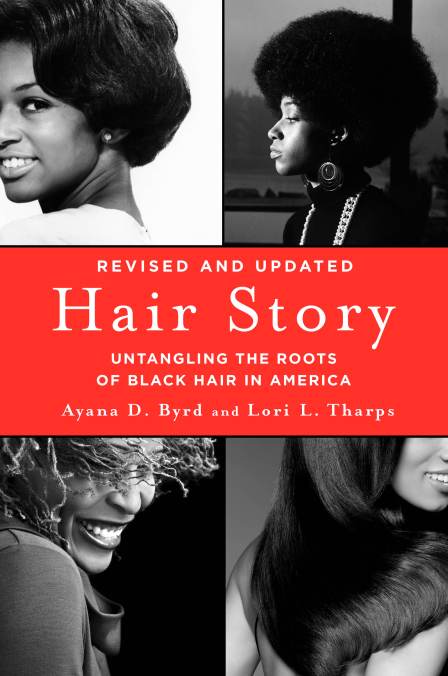
Books By Ky: Hair Story Untangling The Roots of Black Hair In America

revhair-story-cover.jpg
Photo Cred: loritharps.com

I know the importance of hair to black women and men. I’ve learned this even more while reading Hair Story: Untangling The Roots of Black Hair in America by Ayana D. Byrd and Lori L. Tharps.

Since our days in Africa, hair to blacks is a form of expression and a source of pride. When we came over here on slave ships, one of the many ways we were dehumanized was by being denied the right and resources to groom ourselves, specifically our hair. As slaves in America, we had to find resources to maintain our tresses. Unfortunately, we weren’t able to carry on with the eccentric styles and braids that we wore in Africa. Some of our ancestors settled with plaits or a head tie. As times changed so did our hair. After slavery, we wanted to fit in so figuring out ways to keep our hair straight was important to us. Once we realized a revolution was on a rise in the 60s and 70s we took pride in our kinks and started wearing it natural, no longer wanting to assimilate. We allowed our hair to send a message to the masses and it did. Black men and women take pride in their hair and this book is one of my must-reads. It allows you to go on a hair journey that doesn’t end with the last page of this book because our hair is constantly evolving.

Follow Lifestylebyky.com blog

Instagram @lifestylebyky

Twitter @bykyblogs

Books By Ky: The Blacker the Berry

51ZRBw79R7L._SX321_BO1,204,203,200_.jpg

The Blacker The Berry is a hard read. The harsh realities of colorism exhibited throughout this book made my heart weak. Emma Lou was typecast as unattractive and some would go so far as to call her ugly because of her dark skin; her life was filled with struggles because of this. Her family were blue bloods and created a chapter of the Blue Vein Society in their hometown. Back in the days, lighter-skinned blacks deemed themselves blue blood or blue veiners (if they were light enough to see the blue veins running through their body).  Emma Lou came out with dark skin like her father, who left her mother and Emma Lou when she was a toddler. Her family saw her father in Emma Lou and resented her.

Emma Lou believed she could escape from this familial scrutiny when she went to college. She was accepted into USC in California. The only problem with Emma Lou was that she internalized a lot of the negative words that her family said to her while growing up and projected her own self-hate onto other blacks, especially dark-skinned, lower-class ones.  She wanted to be accepted with the well-to-do blacks, but they weren’t accepting of her because of her skin color. Desperately searching for a place where she could belong, Emma Lou left USC and moved to Harlem. Yet, she soon learned no matter where she went, she could not escape the demons of her past.

Emma Lou allowed herself to be trapped by her skin color and by the lies she was taught growing up. She encountered terrible relationships, where men, especially Alva, was ashamed of her because of her dark skin and rarely brought her around their friends on a social scale. One day, after many ups and downs, Emma Lou grew tired of allowing her skin color to trap her. She ran from her color issues her whole life and it was finally time she accepted herself.

Her struggle resonated with me in so many ways. Sometimes, we allow the people who are supposed to protect us, to hurt us the most. We fall victim to their misguided perceptions, especially when it comes to standards of beauty and it affects our lives tremendously. Emma Lou allowed the harsh words of her family in her early years to affect the way she looked at herself and it traumatized her for years. Many people are struggling with this very issue, even in today’s society. Eurocentric standards of beauty do very little to empower black women. We have to break these shackles, by empowering ourselves, building confidence in who we are and disallowing society to tell us how we should look. We have to reclaim our beauty.


Follow Lifestylebyky.com blog

Instagram @lifestylebyky

Twitter @bykyblogs